The water path / Hangers and pitch
Stage 03 / how it is held up
A gutter is a beam full of water, and water is heavy
Standing water in a clean gutter is not a cleaning failure. It is a geometry failure, and geometry failures get worse on their own.
Water weighs a bit over eight pounds a gallon. A five inch K-style trough is somewhere around seven and a half square inches of cross section, which works out at a shade under half a gallon for every running foot. So a thirty foot run, briefly full in a downpour, is holding about twelve gallons: call it a hundred pounds, hanging off the edge of a board, on fasteners you have never looked at.
A hundred pounds is not alarming on its own. What makes it matter is that the load is not static. Add wet leaves and it is heavier. Add a February morning where all of it froze and you have a rigid mass sitting on a fastening that was already working at the edge of what it was asked to do, and unlike water, ice does not drain away when the storm stops.
Pitch: the fall you cannot see from the ground
A gutter is hung with a deliberate slope towards the outlet. It is a small slope. It is meant to be small, because a gutter with obvious fall looks wrong against a horizontal fascia and the eye picks it up immediately from the kerb. The usual practice is a fraction of an inch of drop for every ten feet of run, enough to move water and not enough to see.
Because it is small, it is fragile. A run that started with correct fall and has since settled by a quarter of an inch in the middle no longer has fall in the middle. It has two short slopes towards a low point, and the low point holds water permanently.
What standing water does
- It grows things. A permanent puddle grows a biofilm, then a sediment bed, then in shady spots actual moss. Debris that would have washed through now has something to stick to.
- It adds permanent load. The sag is now being held down by the weight of the water sitting in it, so the sag gets deeper, so it holds more water. This is a loop and it does not stop.
- It freezes. Water in the low pocket is the first thing to freeze in the run and the last thing to thaw, which puts a block of ice at exactly the point where the metal is already stressed.
- It corrodes. Aluminium in constant contact with wet sediment does not last as long as aluminium that dries out between rains.
Figure 3 · A gutter is a beam full of water. Spacing is not a detail: it decides whether the run holds the pitch it was hung with or slowly finds a low point of its own, which then holds water, grows a biofilm, freezes, and gets blamed on leaves.
Spikes and ferrules, and what they did
An enormous number of older St. Louis houses have gutters hung with spikes: a long nail driven through the front lip of the gutter, through a spacer tube, into the fascia board and ideally into the rafter tail behind it. It was the standard method for decades and it works, right up until it does not.
The failure is predictable. Every thermal cycle, every load of water, every ladder leaned on the gutter works the spike a fraction outward. Once it has backed out a few millimetres, the hole in the fascia is now larger than the spike and water gets into end grain. Somebody notices the gutter drooping, hammers the spike back in, and repeats the process until the wood behind the fascia has nothing left to grip. What you often find when the gutter finally comes off is a line of enlarged, blackened holes and a fascia board that is soft from the back.
Hidden hangers, the modern approach, clip inside the trough and screw into the fascia. They are not a miracle either, but a screw does not back out under thermal cycling the way a spike does, and there is no hole through the front face of the gutter for water to find.
Say the unflattering thing
New gutter on bad fascia is money burned
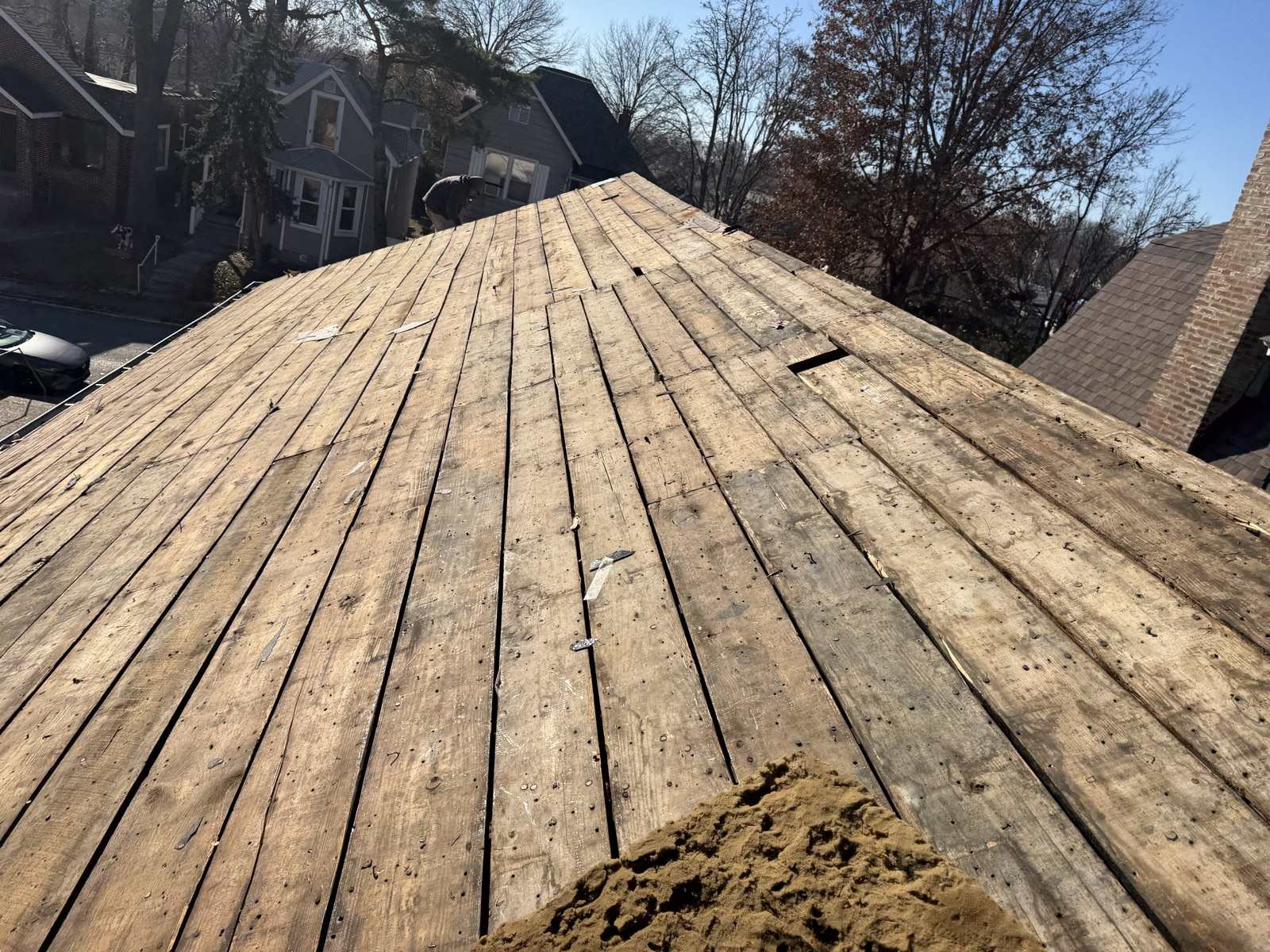
Hangers screw into fascia. If the fascia is already soft, the screws are going into something with the structural quality of a wet sponge, and a beautiful new seamless run will start sagging within a couple of seasons. Any company that quotes you new gutters without ever touching the fascia board has not checked the only thing the gutters will be attached to. Sometimes the honest answer is that carpentry has to happen first, and that is a worse quote for us to give and a better one for you to hear.
Spacing, and why it is not a detail
Hangers carry the load between them. Double the spacing and each hanger carries roughly twice the water, and the span between them deflects considerably more than twice as much, because a beam's deflection climbs much faster than its length does. Wide spacing is invisible on a dry day and shows up as a wave in the run the first time the gutter fills.
Spacing also gets tightened in specific places for specific reasons: near an outlet where the flow concentrates, under a valley where the impact load lands, and along any elevation that regularly carries snow and ice slide-off from a steep plane above.
How to check your own run in five minutes
Wait until an hour after a rain has stopped. Stand at one end of each run and sight along the front lip like you are sighting down a rifle. A straight line is a straight line, and a wave is obvious once you look for it. Then look for the tell-tale: a stripe of dirt or a mineral line on the inside face of the trough marks where water sat. If that line is level rather than sloping, the run has no fall left. Finally, look at the fascia below the gutter for stripes, blistered paint, or a rust weep from a fastener head.
None of that requires a ladder, and it tells you more than a cleaning invoice will.
Next step
Have someone look at the run before you buy anything
Sag, fall and fascia condition are three separate things and they get diagnosed together, from a ladder, in about fifteen minutes. Keys Roofing does roofing, gutters and downspouts, and nothing else. Call (314) 220-2333 or use the callback form on the front page.
Ask about a sagging run
If one run still holds water after the rain stops
A gutter with standing water in it an hour later is telling you about hanger spacing or fall, and both of those are measurable in about ten minutes with a level and a tape.
Tell us which elevation it is and whether the fascia behind it feels soft. That decides whether this is a gutter job or a carpentry job first.
Straight through to the Keys office. Roofing, gutters and downspouts only, across greater St. Louis.