The water path / The gutter year
Seasonal / the calendar
The gutter year, and the two weeks that matter most
Most gutter maintenance advice is written for nowhere in particular. This one is written for a climate with heavy spring storms, an oak-heavy tree canopy and a winter that keeps crossing freezing point.
There is no correct number of times a year to clean a gutter. It depends entirely on what is over your house. A house with nothing overhanging it and a house under three mature pin oaks are not doing the same job, and telling both of them twice a year is a marketing answer rather than a real one.
What does hold across the metro is the shape of the year, because the loads arrive at predictable times.
Late winter into early spring
The first genuinely useful thing you can do is watch the system work during a serious rain in March, when the trees are still bare and the gutters are as clean as they will ever be. Anything that overflows now is not overflowing because of leaves. That is a sizing or a pitch problem and you have just diagnosed it for free.
This is also when winter damage becomes visible: a run that has dropped, a downspout that buckled in a freeze, a joint that started weeping, a section of fascia that has gone dark. Look while you can still see the fascia through bare branches.
Spring, which is the heavy season
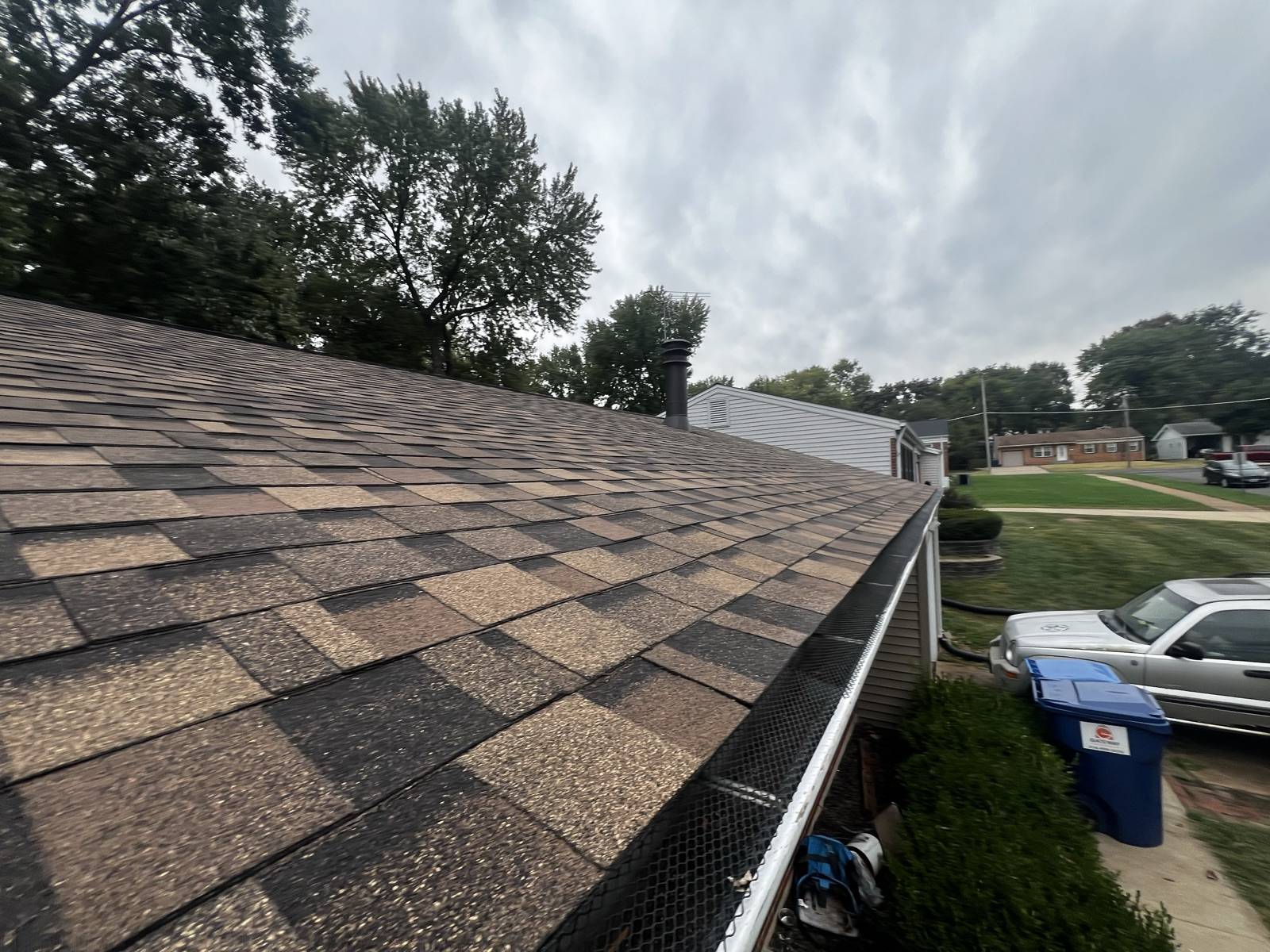
Two things happen at once. The storms get serious, and the trees put an enormous amount of fine material on the roof: pollen, catkins, maple seed, and the flower drop that comes off oaks in a matter of days. That fine material is exactly the stuff that gets past a coarse screen and settles in a micro-mesh. It is the reason guards need looking at in spring even though nobody associates spring with gutter debris.
Spring is also when hail and wind damage happens in this region, and if anything hit the roof, the gutters will often show it first, because a dented gutter face is visible from the ground when roof damage is not.
A note on storms and insurance
What a contractor may and may not do
If a storm damages your roof or your gutters, the claim is yours. Missouri law at RSMo 407.725 bars a roofing contractor from representing or negotiating on a homeowner's insurance claim, and Keys does not do so. What a contractor can properly do is inspect, photograph, measure and provide a written scope of the work, and be on site as the contractor when an adjuster comes out. The conversation with your insurer stays yours.
Summer
The quiet season for debris and the loud season for heat. Aluminium expands, sealant at joints works hardest, and any run holding standing water is now growing something in it. Summer is a good time for the jobs that are unpleasant in cold weather: resealing corners, replacing a length of soft fascia, adding an outlet to an overloaded run, or putting in a buried line while the ground is workable and the sod will still knit before winter.
Autumn, and the two weeks that matter
Here is the specific claim of this page. The single highest value fortnight in the gutter year is the stretch after the last leaves are down and before the first hard freeze. In this metro that is usually somewhere in the back half of November, though it moves.
Clear before that window and you will do it again, because oaks in particular hold their leaves stubbornly and drop them late. Clear after it and whatever is in the gutter is frozen into a block, holding water against the metal, loading the hangers, and staying there until the thaw.
The mistake almost everyone makes is booking the autumn clean in October because that is when it feels like autumn. It feels right and it is a fortnight early.
Say the unflattering thing
The check nobody does is the one that matters most
Everybody thinks about the trough. Almost nobody tests the downspout and the discharge. Put a hose in the top of every downspout, one at a time, and then walk to where that water is supposed to come out and confirm it does. On a buried line, go and stand at the outlet.
This takes about ten minutes for a whole house, it costs nothing, and it is the only way to find a silted buried line, a blocked underground run or a disconnected extension before the storm finds it for you. A gutter cleaning service that clears the trough and never tests the downspouts has done half the job, and it is not the important half.
Winter
Mostly leave it alone. Do not go up a ladder onto an iced eave, and do not attack an ice dam with anything sharp, because you will damage shingles and gutter and possibly yourself, and the dam will re-form in a week anyway.
What is worth doing is watching. Where are the icicles, and are they in the same place every year. Where is discharge freezing on a path. Which elevation melts first. Those observations tell you what to fix in the spring, and the answer is often up in the attic rather than at the eave. The ice page explains why.
A short honest schedule
- Every serious rain, occasionally: go outside and look. Nothing else in this list is as informative.
- March: inspect for winter damage. Sight the runs. Look at the fascia while the branches are bare.
- Late spring: deal with fine debris, especially if you have guards. Check after the first big storm of the season.
- Summer: the right time for repairs, reseals, added outlets and any excavation.
- Late November, after the last drop and before the first hard freeze: the big one. Clear everything.
- At the same visit: hose test every downspout and go and look at every discharge point.
That is the whole calendar. Two of those six items are things a homeowner can do in an afternoon, and one of them is the item most services skip.
Next step
Have someone look at the run before you buy anything
If you would rather somebody else went up the ladder in November, that is a normal request and it is worth booking before the queue forms. Keys Roofing does roofing, gutters and downspouts, and nothing else. Call (314) 220-2333 or use the callback form on the front page.
Ask about the two weeks
Book it before the leaves have finished falling
The check that matters most is the one almost nobody does: a hose down every downspout once the trees are bare, with somebody at the bottom watching where the water actually comes out.
If you would rather not be the person on the ladder for that, say so, and tell us how many storeys we are talking about.
Straight through to the Keys office. Roofing, gutters and downspouts only, across greater St. Louis.